
A spray booth is an enclosed painting environment designed to provide clean airflow, stable temperature, and effective overspray filtration. Whether used in automotive refinishing, truck painting, or industrial manufacturing, a professional spray booth ensures consistent paint quality while protecting both operators and the surrounding environment.
But how does a spray booth actually work?
Understanding the working principle of a spray booth helps workshop owners choose the right system, improve efficiency, and achieve better painting results.
In this guide, we’ll explain every stage of the spray booth process—from fresh air entering the booth to the final curing cycle.
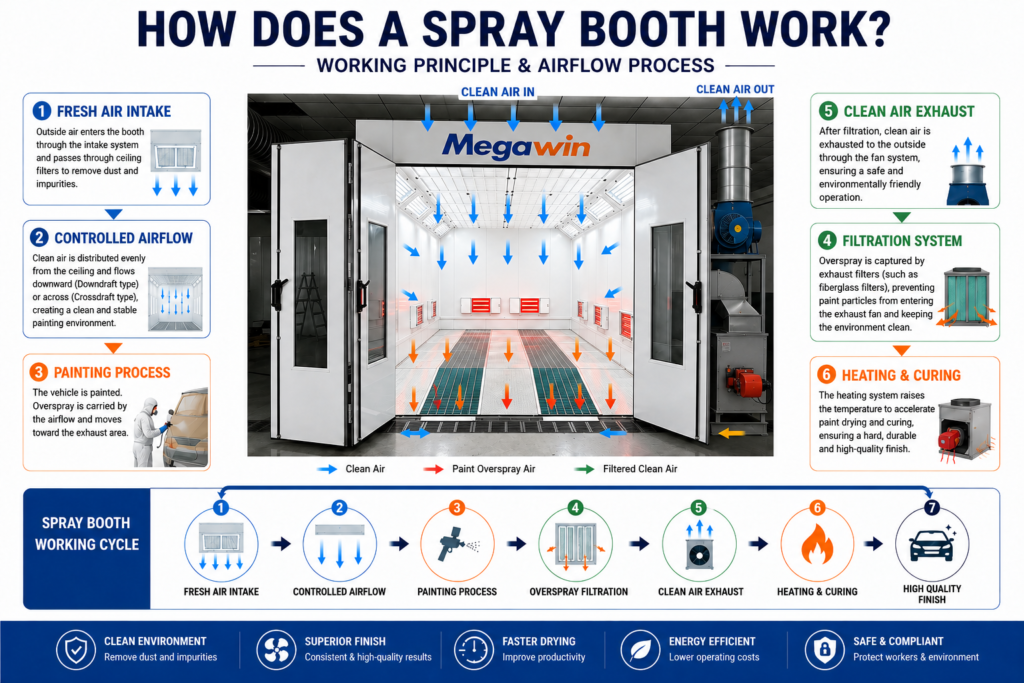
What Is a Spray Booth?
A spray booth is a controlled painting chamber that combines ventilation, filtration, heating, and lighting systems to create ideal conditions for applying paint.
Its primary functions include:
- Removing dust and airborne contaminants
- Controlling airflow direction
- Capturing paint overspray
- Maintaining consistent temperature
- Improving worker safety
- Producing a high-quality paint finish
Without a spray booth, dust particles, unstable temperatures, and poor ventilation can lead to defects such as orange peel, fisheyes, and uneven paint coverage.
The Four Main Systems of a Spray Booth
A modern spray booth consists of four essential systems:
- Air Intake System
- Airflow & Ventilation System
- Filtration System
- Heating & Curing System
Each system plays a critical role in achieving professional painting results.
Step 1 – Fresh Air Intake
The painting process begins when fresh outside air enters the spray booth.
Before entering the booth, the air passes through ceiling intake filters, which remove dust, pollen, and other airborne particles.
Clean intake air helps prevent contamination during painting and creates a cleaner working environment.
Step 2 – Controlled Airflow
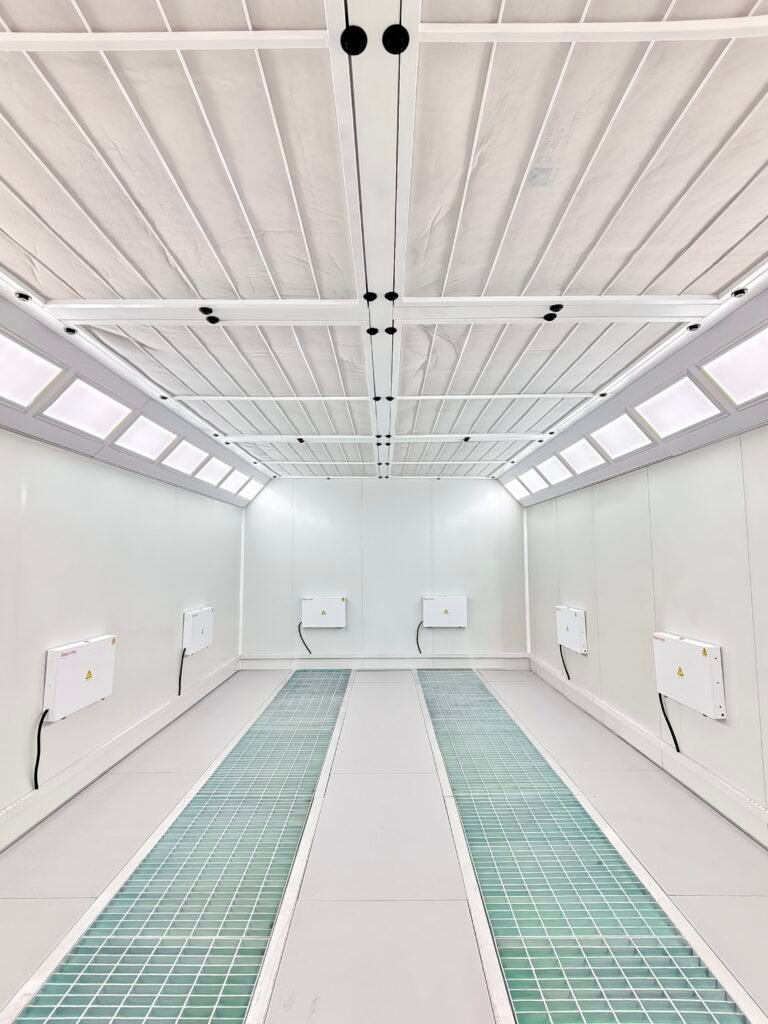
Once filtered, fresh air is distributed evenly throughout the booth.
Depending on the spray booth design, airflow may follow different patterns:
Downdraft Spray Booth
Air enters through the ceiling and flows downward toward the floor before exiting through floor exhaust filters.
Benefits include:
- Highest paint quality
- Minimal dust contamination
- Excellent overspray removal
- Preferred by professional body shops
Semi-Downdraft Spray Booth
Air enters from the ceiling and exits through rear exhaust filters.
This design balances performance and installation cost.
Crossdraft Spray Booth
Air enters from the front of the booth and exits through the rear wall.
Crossdraft booths are economical and suitable for lower production volumes.
Selecting the right airflow configuration depends on workshop size, production requirements, and budget.
Step 3 – Overspray Filtration
During painting, excess paint particles remain suspended in the air.
The filtration system captures these particles before the air is discharged.
Typical filters include:
- Ceiling intake filters
- Exhaust filters
- Floor filters
- Fiberglass paint arrestor filters
- Activated carbon filters (optional)
Efficient filtration protects both the environment and the ventilation system while extending equipment lifespan.
Step 4 – Heating and Curing
After the paint is applied, the booth switches to curing mode.
The heating system raises the booth temperature to accelerate paint drying.
Common heating options include:
- Diesel burner
- Natural gas burner
- LPG burner
- Electric heating
Warm air circulates evenly throughout the booth, allowing coatings to cure faster while producing a harder and more durable finish.
Step 5 – Air Exhaust
After filtration, clean air exits the spray booth through the exhaust system.
Modern booths are designed to meet environmental regulations by minimizing emissions and controlling overspray.
Balanced exhaust airflow also maintains stable air pressure inside the booth, improving painting consistency.
Key Components of a Spray Booth
A professional spray booth includes several important components:
Air Intake Unit
Supplies clean, filtered air into the booth.
Fan System
Maintains stable airflow throughout the painting process.
Filtration System
Captures dust and overspray particles.
Heating Unit
Provides controlled curing temperatures.
LED Lighting
Delivers bright, shadow-free illumination for accurate color matching.
Control Panel
Allows operators to switch between spray mode and bake mode while monitoring temperature and system status.
Why Airflow Is So Important
Airflow is one of the most critical factors affecting paint quality.
Proper airflow provides:
- Cleaner paint finishes
- Less dust contamination
- Faster drying
- Reduced overspray
- Improved operator safety
Poor airflow can cause paint defects, longer curing times, and higher operating costs.
Spray Booth Working Cycle
A complete painting cycle typically follows these steps:
- Fresh air enters the booth.
- Air passes through intake filters.
- Clean air flows evenly around the vehicle.
- Overspray is captured by exhaust filters.
- Heating system activates for curing.
- Filtered air exits the booth.
- The vehicle is ready for inspection and delivery.
This controlled process ensures consistent and repeatable painting results.
Benefits of Using a Professional Spray Booth
Compared with open painting areas, a professional spray booth offers many advantages.
Superior Paint Quality
Controlled airflow reduces contamination and improves finish consistency.
Faster Production
Efficient heating shortens drying times, increasing workshop productivity.
Lower Operating Costs
Energy-efficient systems reduce electricity and fuel consumption.
Improved Safety
Proper ventilation removes harmful paint vapors, creating a healthier workplace.
Environmental Compliance
Advanced filtration helps reduce emissions and meet local environmental standards.
Why Choose Megawin?
Megawin designs and manufactures professional spray booths for automotive and industrial applications worldwide.
Our spray booths feature:
- Optimized airflow engineering
- High-efficiency filtration systems
- Energy-saving heating technology
- Bright LED lighting
- Intelligent control systems
- Customized dimensions and configurations
- CE-compliant manufacturing
- Global installation support
Every Megawin spray booth is engineered to deliver outstanding paint quality, long-term reliability, and lower operating costs.
Frequently Asked Questions
Why does a spray booth need airflow?
Airflow removes overspray, keeps the painting environment clean, and ensures a smooth, defect-free finish.
Which airflow design is best?
Downdraft spray booths provide the highest paint quality, while Semi-Downdraft and Crossdraft systems offer cost-effective alternatives depending on the application.
Can a spray booth reduce drying time?
Yes. Heated spray booths significantly accelerate paint curing, allowing vehicles to return to service more quickly.
How often should filters be replaced?
Filter replacement depends on workload, but most intake and exhaust filters should be inspected weekly and replaced every 3–6 months under normal operating conditions.
Conclusion
Understanding how a spray booth works helps businesses make informed equipment decisions and maximize painting efficiency. From filtered air intake and balanced airflow to advanced heating and overspray filtration, every component plays a role in producing high-quality finishes.
Whether you’re building a new collision repair center or upgrading an industrial painting line, investing in a professionally designed spray booth can improve productivity, reduce operating costs, and ensure consistent painting results.
At Megawin, we provide complete spray booth solutions tailored to the needs of customers around the world.