
Selecting the right heating system is one of the most important decisions when purchasing an automotive spray booth. While both gas burners and diesel burners provide the heat required for paint curing, they differ in installation requirements, operating costs, heating performance, and maintenance.
Understanding these differences will help you choose the most suitable solution for your workshop, whether you’re operating a small body shop or a large collision repair center.
In this guide, we’ll compare Gas Burner vs Diesel Burner Spray Booth systems to help you make an informed investment.
Why Does the Heating System Matter?
During the baking cycle, a spray booth must quickly raise and maintain a stable temperature to cure automotive paint properly.
An efficient heating system helps:
- Accelerate paint drying
- Improve paint hardness and gloss
- Reduce dust contamination
- Increase workshop productivity
- Lower long-term operating costs
The right burner directly impacts energy efficiency, production capacity, and operating expenses.
What Is a Gas Burner Spray Booth?
A gas burner spray booth uses natural gas or LPG (liquefied petroleum gas) as its fuel source.
The burner heats fresh air through a heat exchanger, and the hot air is circulated evenly throughout the spray booth during the baking process.
Advantages
- Lower fuel cost in many regions
- Fast heating speed
- Stable temperature control
- Cleaner combustion
- Lower carbon emissions
- Less maintenance
- Ideal for high-volume production
Considerations
- Requires access to a gas supply
- Installation may require local gas approvals
- Initial installation cost may be higher
What Is a Diesel Burner Spray Booth?
A diesel burner spray booth uses diesel fuel stored in an external fuel tank.
Diesel burners are widely used because they are easy to install and can operate almost anywhere.
Advantages
- No gas pipeline required
- Suitable for remote locations
- Lower initial installation requirements
- Easy fuel availability in many countries
- Reliable heating performance
Considerations
- Fuel prices fluctuate
- More regular maintenance
- Fuel filters and nozzles require periodic replacement
- Slightly higher emissions compared to gas systems
Gas Burner vs Diesel Burner Comparison
| Feature | Gas Burner | Diesel Burner |
|---|---|---|
| Fuel Source | Natural Gas / LPG | Diesel |
| Heating Speed | Excellent | Excellent |
| Temperature Stability | Excellent | Very Good |
| Fuel Cost | Usually Lower | Usually Higher |
| Installation | Gas Pipeline Required | Simple Installation |
| Maintenance | Low | Medium |
| Emissions | Lower | Higher |
| Noise | Lower | Slightly Higher |
| Best For | Large Workshops | Small & Medium Workshops |
Operating Cost Comparison
Operating costs depend largely on local fuel prices.
Gas Burner
If natural gas is readily available, gas heating generally offers lower long-term operating costs because:
- Lower fuel price
- Higher combustion efficiency
- Reduced maintenance expenses
Gas burners are particularly economical for workshops running multiple baking cycles every day.
Diesel Burner
Diesel burners typically have:
- Higher fuel costs
- Greater maintenance requirements
- More frequent servicing
However, they remain an excellent choice in regions without access to natural gas.
Heating Performance
Both systems are capable of achieving the curing temperatures required for automotive refinishing.
Typical baking temperature:
60–80°C (140–176°F)
Both burner types provide:
- Rapid warm-up
- Stable temperature control
- Uniform heat distribution
- Consistent curing performance
Modern burners equipped with digital controllers maintain precise temperature throughout the baking cycle.
Maintenance Requirements
Gas Burner
Routine maintenance usually includes:
- Burner inspection
- Gas valve checks
- Air filter replacement
- Heat exchanger cleaning
Overall maintenance frequency is relatively low.
Diesel Burner
Diesel burners require additional servicing, including:
- Fuel nozzle replacement
- Diesel filter cleaning
- Fuel pump inspection
- Combustion adjustment
- Carbon deposit removal
Proper maintenance ensures optimal combustion efficiency and extends burner life.
Environmental Impact
Many workshops are placing greater emphasis on sustainability.
Gas burners generally produce:
- Lower CO₂ emissions
- Cleaner combustion
- Less smoke
- Reduced odor
Diesel burners, while highly reliable, produce slightly higher emissions and may require more frequent cleaning of exhaust components.
Which Heating System Is Right for You?
Choose a Gas Burner Spray Booth If:
- Natural gas is available
- Your workshop operates continuously
- You want lower long-term operating costs
- Environmental regulations are strict
- Energy efficiency is a priority
Choose a Diesel Burner Spray Booth If:
- Gas infrastructure is unavailable
- Installation simplicity is important
- Your workshop is located in a remote area
- Initial investment is limited
- Diesel fuel is easily accessible
Megawin Spray Booth Heating Solutions
Megawin provides both gas-heated and diesel-heated spray booth systems to meet the needs of customers worldwide.
Our heating systems feature:
- High-efficiency burners
- Intelligent temperature control
- Energy-saving heat exchangers
- Uniform hot-air circulation
- Fast heating performance
- Reliable safety protection
- CE-compliant components
- Custom voltage and fuel options
Every project is customized according to the customer’s country, fuel availability, production requirements, and local regulations.
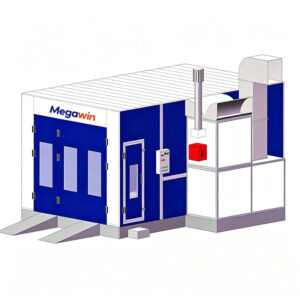
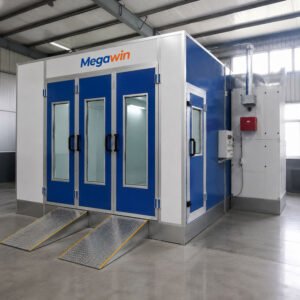
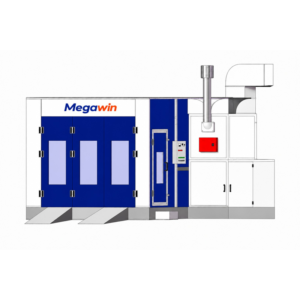
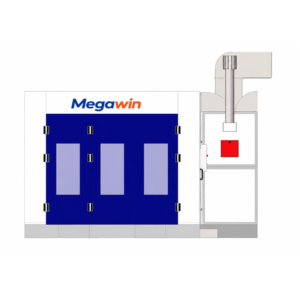
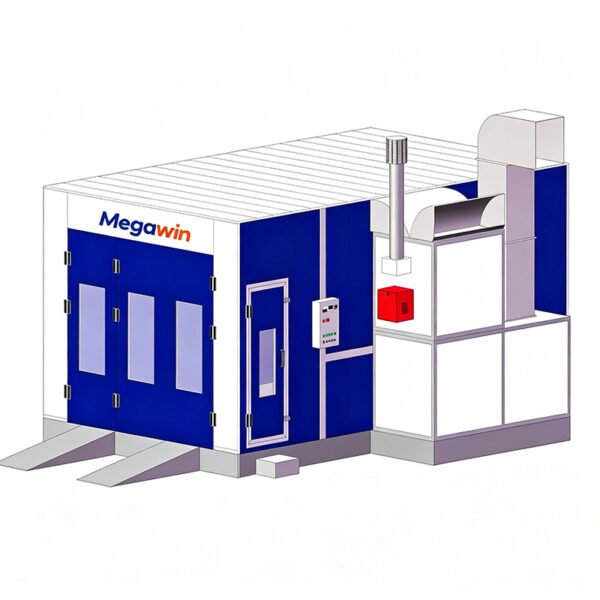
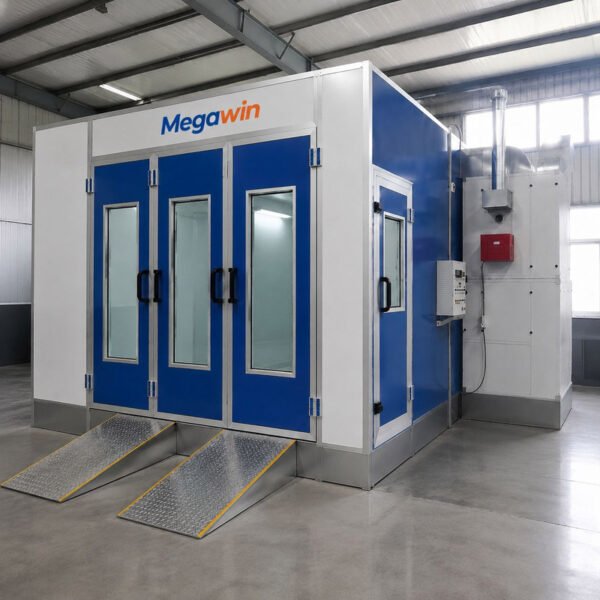
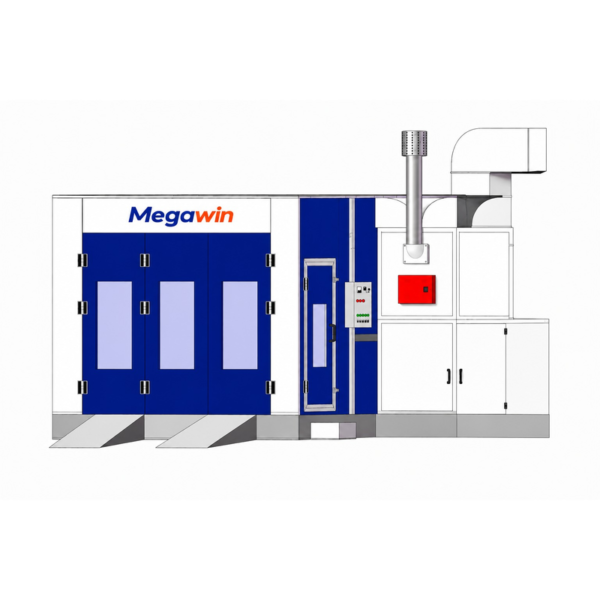
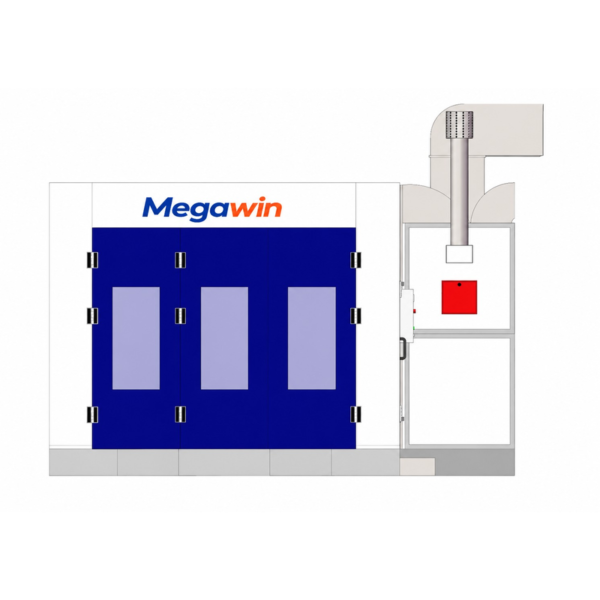
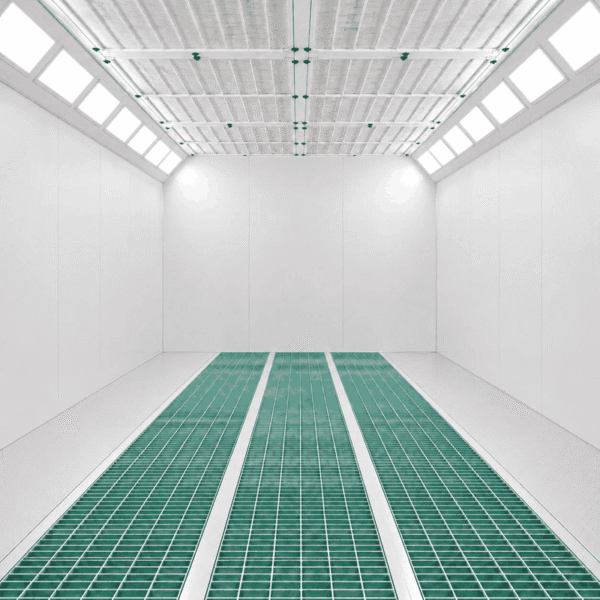
MGW-D70 Diesel-Heat Car Spray Booth
MGW-D70 diesel-heat spray booth is used for standard car spraying and baking,by side exhaust
Frequently Asked Questions
Which heating system is more economical?
In areas with affordable natural gas, gas burners generally have lower operating costs over time. Where gas is unavailable, diesel burners provide a practical and reliable alternative.
Which burner heats faster?
Modern gas and diesel burners both offer rapid heating and can achieve the temperatures required for automotive paint curing efficiently.
Is a diesel burner easier to install?
Yes. Diesel systems do not require a gas pipeline, making them simpler to install in many locations.
Can Megawin supply both systems?
Yes. Megawin offers spray booths equipped with either gas burners or diesel burners, and we can recommend the most suitable option based on your local fuel supply and operational needs.
Conclusion
When comparing Gas Burner vs Diesel Burner Spray Booth systems, there is no one-size-fits-all answer. Gas burners excel in energy efficiency, lower emissions, and reduced operating costs where gas is available. Diesel burners offer greater flexibility, easier installation, and dependable performance in regions without gas infrastructure.
By evaluating your local fuel availability, production volume, installation conditions, and long-term operating costs, you can choose the heating solution that delivers the best return on investment.
If you’re planning a new spray booth or upgrading an existing one, Megawin can help you select the right heating system to maximize efficiency and paint quality.