Choosing the right automotive spray booth is an important investment for auto body shops, automotive equipment distributors, and vehicle refinishing businesses. The right equipment can help improve coating consistency, optimize workshop efficiency, and support long-term operating performance.
However, not all spray booths are designed for the same applications. Booth dimensions, airflow configuration, filtration, heating systems, construction materials, and installation conditions all influence the suitability of a spray booth for a particular project.
As a professional spray booth manufacturer, MEGAWIN works with customers to evaluate these factors and develop solutions based on their specific requirements.
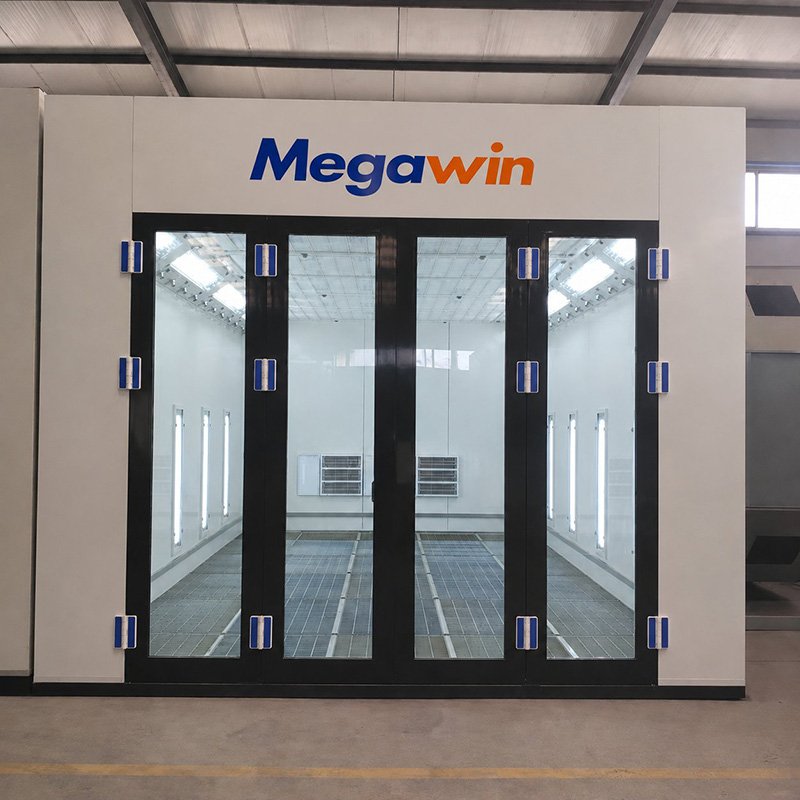
1. Determine the Required Spray Booth Size
The first step is to determine the dimensions of the vehicles or workpieces that will be painted.
For automotive refinishing, the booth should provide sufficient clearance around the vehicle for technicians to move safely and spray all required surfaces. Selecting a booth that is too small may restrict access, while an unnecessarily large booth may increase equipment and operating costs.
Before selecting a model, consider:
- Maximum vehicle length, width, and height.
- Required working clearance around the vehicle.
- Space for opening vehicle doors and accessing painted surfaces.
- Available installation space inside the workshop.
- Future changes in vehicle types or business requirements.
For workshops handling SUVs, vans, light commercial vehicles, or specialized vehicles, customized dimensions may be worth considering.
A professional manufacturer can evaluate these requirements before recommending a suitable booth layout.
2. Select the Appropriate Airflow Configuration
Airflow design directly affects how air moves through the spray booth and how overspray is removed from the working area.
Common configurations include crossdraft, semi-downdraft, and downdraft systems.
Crossdraft spray booths generally move filtered air horizontally from the intake side toward the exhaust side. They can be a practical option for workshops seeking a relatively straightforward installation.
Semi-downdraft spray booths direct air from the upper front section toward a lower or rear exhaust area. They may suit facilities where a full downdraft foundation is not practical.
Downdraft spray booths introduce filtered air through the ceiling and move it downward toward a floor-level exhaust system. They are often considered for applications requiring carefully controlled airflow distribution, although installation and foundation requirements must be evaluated.
The best configuration depends on the coating process, workshop layout, ventilation requirements, and available budget. Buyers should compare complete system designs rather than choosing based on the configuration name alone.
3. Evaluate the Heating System
The heating system is another important consideration when choosing an automotive spray booth.
Depending on the equipment design, available energy sources, and local conditions, common options include diesel-fired, natural gas-fired, and electric heating systems.
Each option has different installation requirements and operating costs.
When comparing heating systems, consider:
- Local electricity and fuel prices.
- Available power supply and fuel infrastructure.
- Required temperature and curing cycle.
- Local ventilation and emissions regulations.
- Maintenance requirements and energy efficiency.
For example, electric heating may be suitable where adequate electrical capacity is available and direct combustion emissions are undesirable. Fuel-fired heating may be worth evaluating where fuel availability, operating costs, and project requirements support that choice.
Heating capacity should be selected according to the booth volume, target temperature, insulation performance, ambient conditions, and required heating time.
Buyers should also confirm whether the equipment is intended for paint application only, flash-off, or a combined spray-and-bake process.
4. Check the Quality of Panels and Insulation
The booth enclosure affects structural performance, thermal insulation, durability, and ease of installation.
When evaluating spray booth panels, buyers should look beyond the external appearance and compare the actual construction specifications.
Important factors include:
- Panel thickness and construction.
- Core insulation material and density.
- Surface coating and corrosion resistance.
- Joint design and sealing performance.
- Dimensional accuracy and manufacturing quality.
Suitable insulation can help reduce heat loss during baking operations and support more stable temperature control. Well-manufactured panel joints also help create a more consistent enclosure.
For distributors and equipment importers, requesting panel specifications, product photos, and production details is a useful way to compare suppliers more accurately.
5. Understand the Filtration System
A spray booth’s filtration system typically includes intake filtration and exhaust filtration, with the arrangement depending on the booth design.
Intake filters help reduce airborne dust entering the booth. Exhaust filters capture paint overspray from the outgoing air stream.
When assessing the filtration system, buyers should consider:
Intake filtration: Is the filter appropriate for the required cleanliness level and airflow volume?
Exhaust filtration: Is the filter compatible with the coating materials and designed to handle the expected overspray load?
Maintenance access: Can filters be inspected and replaced without unnecessary downtime?
Replacement costs: Are replacement filters readily available, and what are the expected maintenance requirements?
Filter replacement intervals vary according to operating hours, dust levels, paint consumption, and pressure drop. A maintenance schedule based on manufacturer recommendations and actual operating conditions is preferable to assuming every filter has the same service life.
6. Compare the Fan and Ventilation Specifications
A spray booth’s ventilation performance depends on the complete air-handling system, not simply the rated motor power.
Before purchasing, ask the supplier for relevant technical information, including:
- Rated airflow volume.
- Fan motor power and operating characteristics.
- Available fan performance at the required system pressure.
- Intake and exhaust arrangement.
- Duct dimensions and installation requirements.
- Ventilation and safety provisions for the intended application.
A fan that is not properly matched to the system resistance may fail to deliver the intended airflow after filters and ductwork are installed.
Buyers should therefore request technical specifications that explain how the ventilation system is intended to perform under the actual operating conditions.
7. Consider Installation, Maintenance, and After-Sales Support
The purchase price is only one part of the total investment. Installation requirements, maintenance, spare parts, and technical support also influence the long-term value of a spray booth.
Before confirming an order, clarify:
- Whether the supplier provides installation drawings.
- Whether the foundation or exhaust pit requires advance preparation.
- Which utilities and site preparations are required.
- Whether installation guidance is available remotely.
- What warranty coverage and spare parts support are included.
- Whether replacement filters and common components can be supplied.
For international projects, installation planning is particularly important because site conditions, electrical standards, building layouts, and local regulations vary between countries.
Working with a manufacturer that can provide clear technical documentation helps reduce avoidable misunderstandings during installation.
Why Work with a Spray Booth Manufacturer Offering Customization?
Standard spray booth models can meet many common requirements, but some projects need a customized solution.
For example, a distributor may need different dimensions for its local market, while an industrial customer may require a booth designed around oversized workpieces or a specific production process.
Customization may involve:
- Booth dimensions and door configurations.
- Crossdraft, semi-downdraft, or downdraft arrangements.
- Heating system selection.
- Intake and exhaust layouts.
- Electrical configurations compatible with the project requirements.
- OEM manufacturing based on agreed specifications or drawings.
A detailed discussion before production helps ensure that the proposed equipment aligns with the customer’s application and installation conditions.
MEGAWIN Automotive Spray Booth Manufacturing Solutions
MEGAWIN manufactures automotive and industrial spray booths for international customers, including equipment distributors, workshop suppliers, and project contractors.
With nearly 30 years of manufacturing experience, we support customers with customized booth configurations, OEM and ODM cooperation, technical drawings, production updates, and installation guidance.
Our approach is to understand the application first, then recommend an equipment configuration that balances coating requirements, installation feasibility, operating costs, and long-term maintenance.
Whether you are planning a new automotive refinishing workshop, expanding an equipment distribution business, or sourcing customized spray booths for your own brand, our team can help evaluate your project requirements.
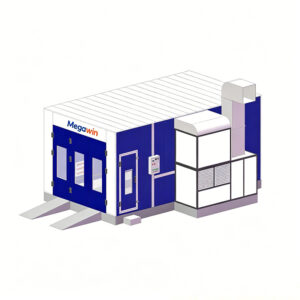
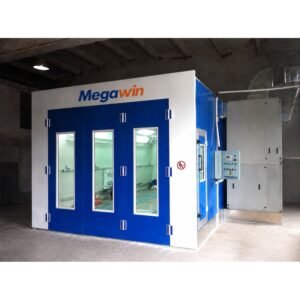
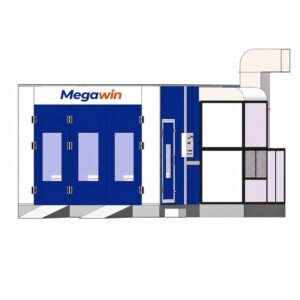
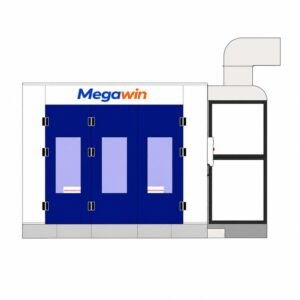
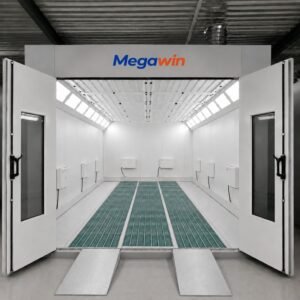
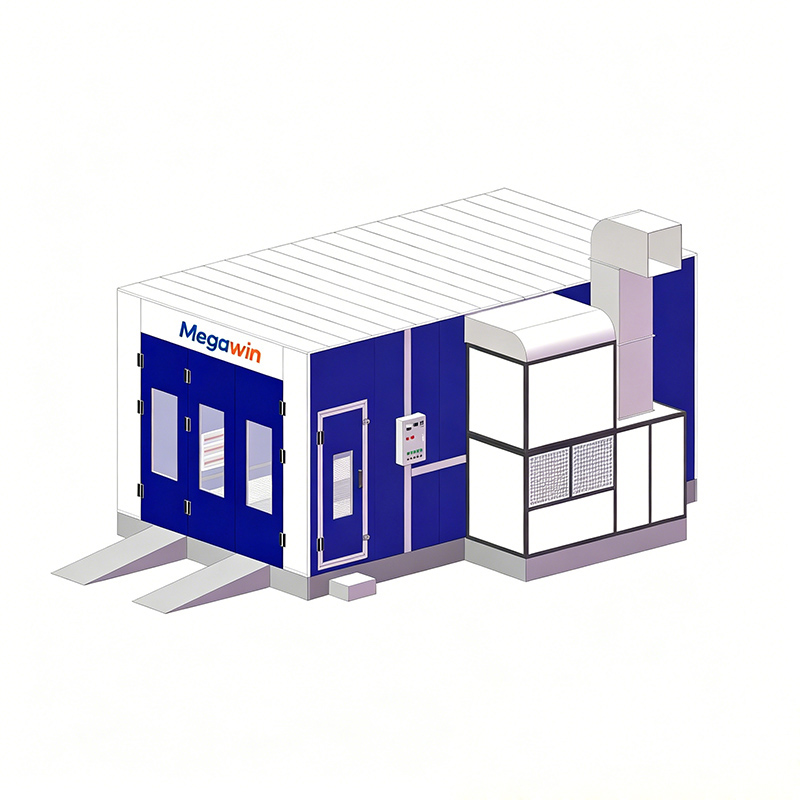
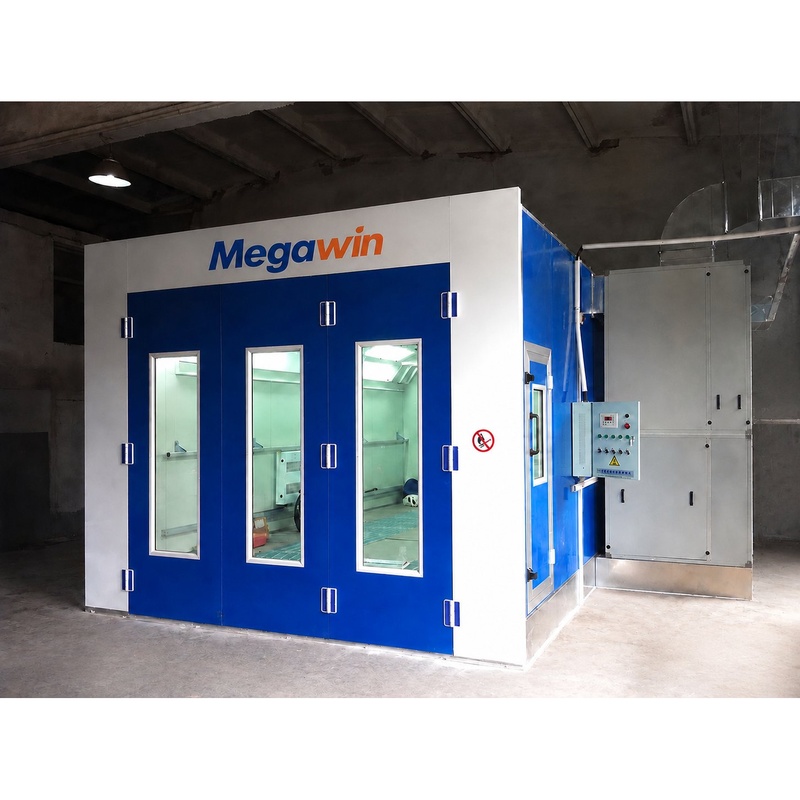
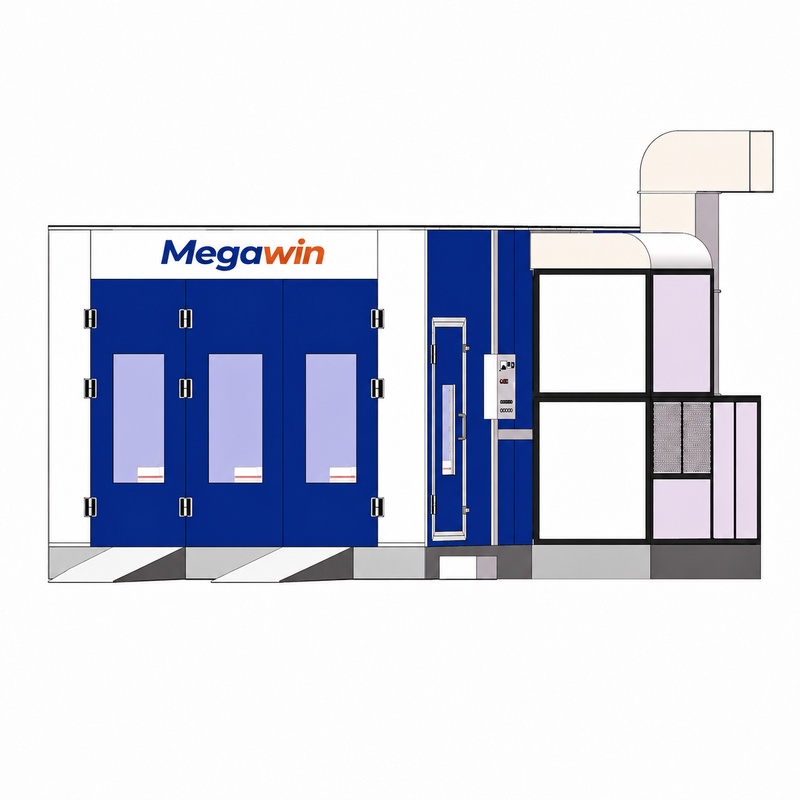
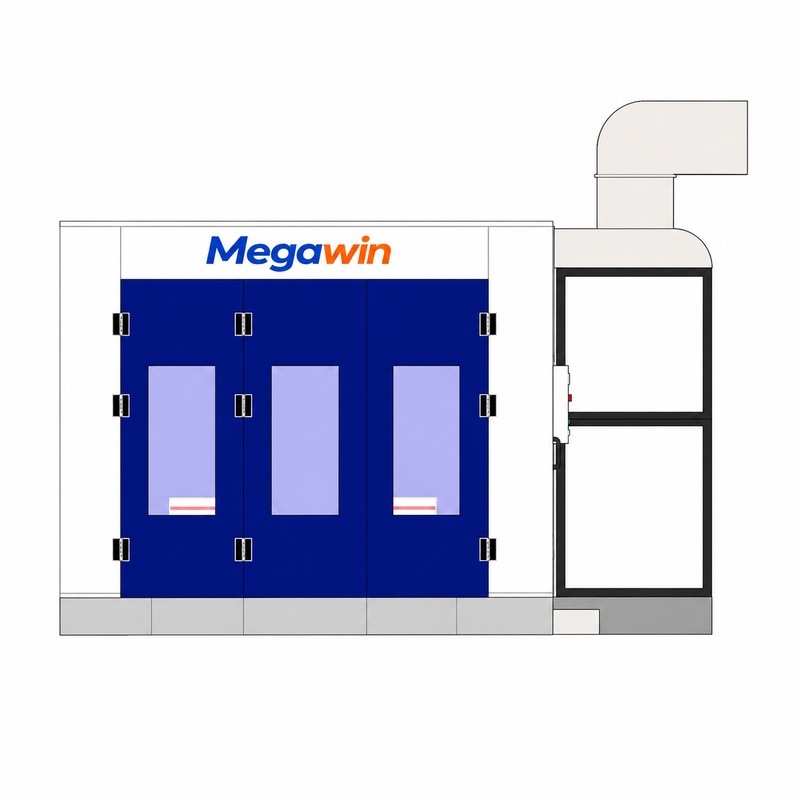
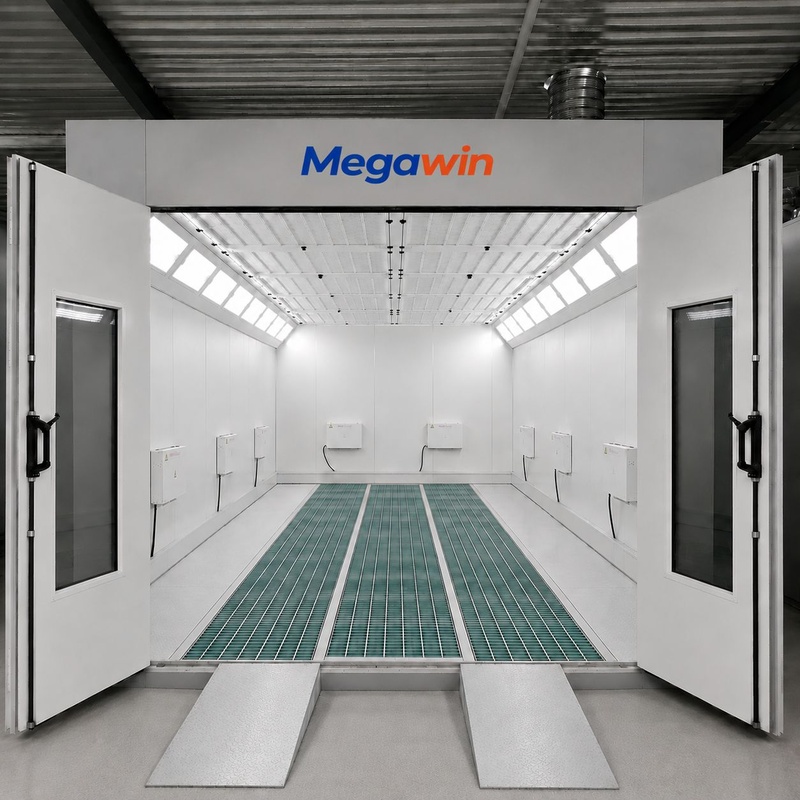
MGW-E70 Electric-Heat Car Spray Booth
MGW-E70 electric-heat spray booth is used for standard car spraying and baking,by side exhaust
Conclusion
Choosing the right automotive spray booth requires a complete assessment of size, airflow, heating, panel construction, filtration, ventilation, and after-sales support.
Comparing these factors systematically helps buyers make informed purchasing decisions and avoid selecting equipment based on price alone.
Planning to source automotive spray booths for your market or project?
Contact MEGAWIN with your required dimensions, preferred heating method, application details, and installation location. Our team will help you evaluate a suitable configuration and prepare a customized quotation.